FOR IMMEDIATE RELEASE
AADMD Welcomes National Council on Disability Action Advancing Disability Competency in Health Professional Education
Federal action signals a national opportunity to make disability competency an expected part of health professional training
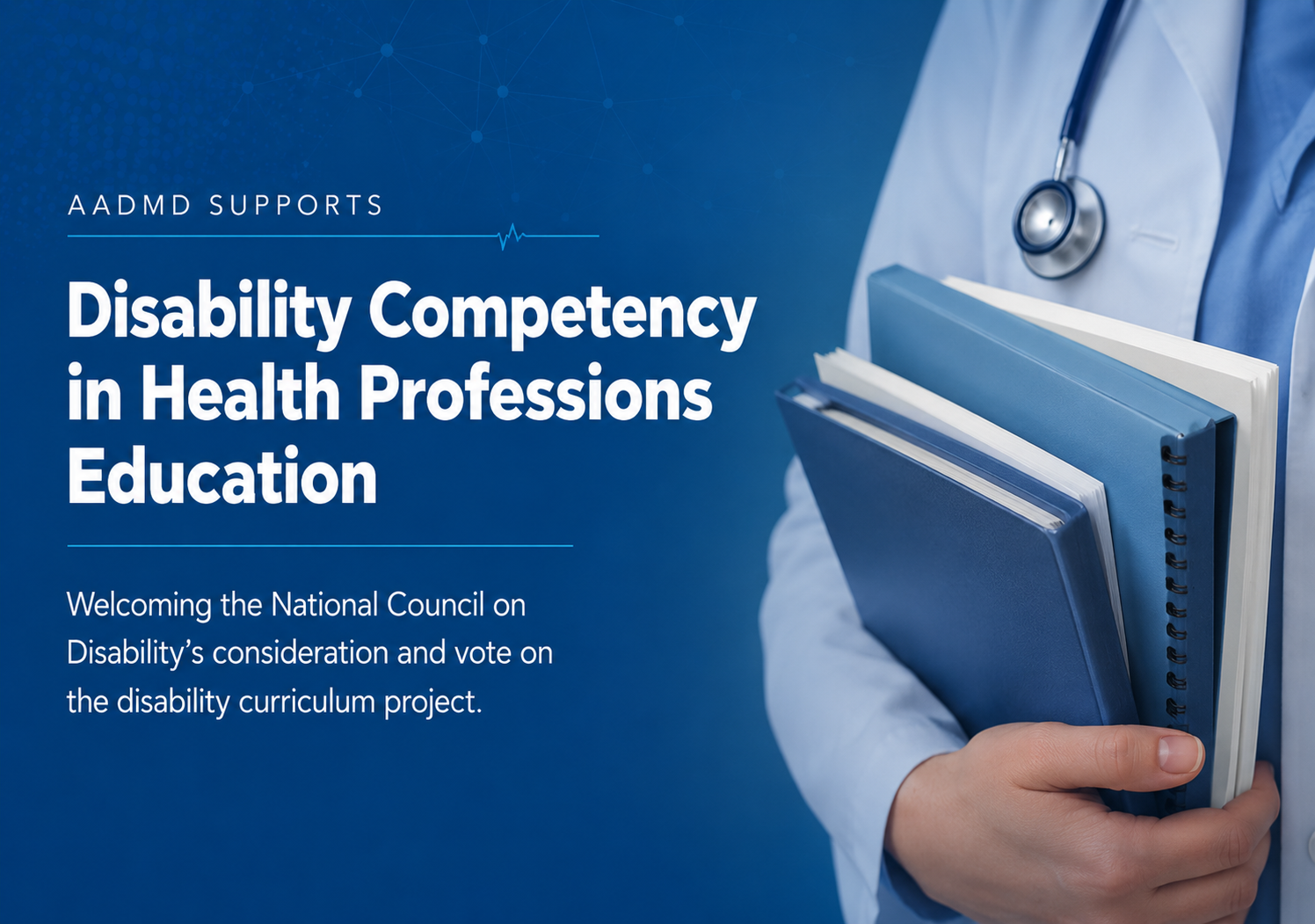
WARWICK, NY — August 2026 — The American Academy of Developmental Medicine and Dentistry (AADMD) welcomes the National Council on Disability’s (NCD) August 19, 2026* consideration and vote on its disability curriculum project. AADMD views this action as an important step in the national effort to ensure that health professionals are prepared to provide equitable, person-centered care to people with disabilities.
People with intellectual and developmental disabilities (IDD) continue to encounter clinicians who have received little formal preparation in disability care. The consequences can include communication barriers, diagnostic overshadowing, missed or delayed diagnoses, inappropriate assumptions about quality of life, fragmented care, and preventable harm.
AADMD believes disability competency is not an optional enhancement to good healthcare; it is part of good healthcare. Every health professional should enter practice with the knowledge, skills, clinical experience, and attitudes needed to care for people with disabilities across the lifespan.
Disability education must also be developed with people with disabilities, not simply about them. People with lived experience, together with families and trusted supporters, should be partners and teachers in preparing the healthcare workforce.
“The question should no longer be whether healthcare professionals need disability competency. The question now is how we ensure that every healthcare professional receives it.”
From Federal Action to Implementation
AADMD has made health professional education a central part of its mission for more than two decades and has supported interdisciplinary curricula and educational programs for clinicians and trainees caring for people with IDD. The NCD action creates an opportunity to accelerate that work nationally.
AADMD encourages medical and dental schools, residency and fellowship programs, nursing and allied health programs, healthcare systems, professional societies, accreditation bodies, policymakers, and federal partners to incorporate meaningful disability competency throughout training. Education should be longitudinal, person-centered, and grounded in relationships with people with disabilities—not limited to an isolated lecture or single encounter.
Key competencies include accessible communication, prevention of diagnostic overshadowing, respect for autonomy and supported decision-making, recognition of an individual’s baseline function and behavior, effective transitions across the lifespan, and understanding how social and structural barriers affect health.
A National Opportunity
NCD is an independent federal agency that advises the President, Congress, and federal agencies on disability policy. AADMD looks forward to reviewing NCD’s final recommendations and working with people with disabilities, educators, professional organizations, accrediting bodies, policymakers, and healthcare systems to translate those recommendations into meaningful change.
For people with disabilities and their families, this issue is immediate: whether a clinician recognizes illness, respects communication differences, investigates a change from baseline, and approaches every patient with the same clinical curiosity, dignity, and expectations for health.
People with disabilities deserve clinicians who are prepared to care for them. Disability competency belongs in the foundation of health professional education.
About AADMD
The American Academy of Developmental Medicine and Dentistry (AADMD) is a nonprofit, interdisciplinary organization of healthcare professionals committed to improving the quality and availability of healthcare for people with intellectual and developmental disabilities. Through education, advocacy, clinical leadership, and collaboration with people with disabilities and their communities, AADMD works toward equitable, high-quality healthcare across the lifespan.
*The August 19th official meeting of the NCD served to report on the findings of their investigation regarding recommendations about the need for disability clinical competency curriculums in medical schools. The official report will be released later this year.